
Hands-On Experience
Wine Blending Classes in Australia
The hands-on experience where you build your own bottle from individual barrel samples. Where to do it, what to expect, and which classes are worth the price.
What a blending class actually is
A wine blending class is the most hands-on activity at any Australian wine region. You spend 90 minutes to three hours with a winemaker or senior cellar hand, tasting individual barrel or tank samples of the same variety from different vineyard blocks, then blending your own version using pipettes and measuring cylinders. At the end you take home a labelled bottle of your blend. It is a genuinely educational experience, the kind that makes you understand what winemakers actually do for a living. The cost is usually $80-150 per person including the bottle, and it pairs naturally with a tasting flight at the same cellar door or a vineyard lunch. The
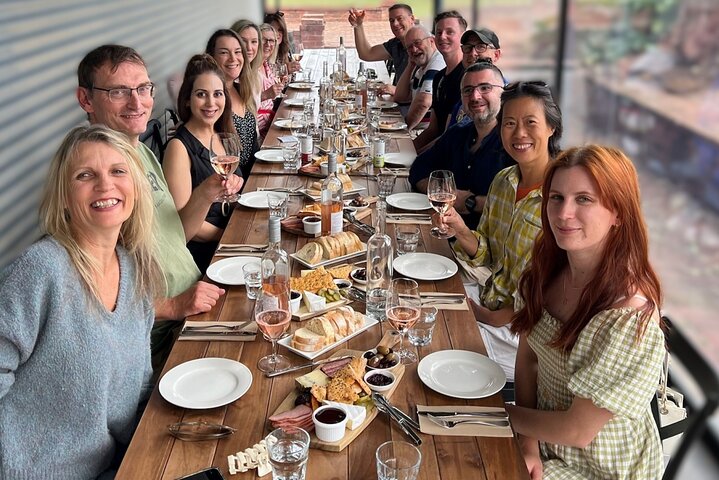
Barossa Valley premium wine tasting experience with winery lunchis one of the most popular versions.
The Barossa, McLaren Vale, Margaret River, and Yarra Valley all offer blending classes, but the format and quality vary. The Barossa options are the most polished, with multiple producers offering daily sessions. McLaren Vale has a few excellent biodynamic-led experiences. Margaret River has a couple of standout classes with cabernet blends. The Yarra Valley has fewer blending-specific experiences but excellent pinot and chardonnay blending at Domaine Chandon.
Expect to spend 90 minutes to three hours at the cellar door, tasting at least four to six component wines, learning how winemakers measure acidity, tannin, and alcohol, and going home with a bottle that has your name and blend recipe on the back label. Some classes also include a vineyard walk to show you where the components come from.
What you will learn
The first thing you will learn is that blending is not just about mixing wines together. It is about understanding how each component contributes to the final blend: the acid from one block, the tannin from another, the fruit character from a third. Most classes teach you the basic principles - how to taste for acid, tannin, body, and finish - and then let you experiment.
The second thing you will learn is that your blend almost never matches the winemaker's. This is humbling in a useful way. The winemaker's job is to make a wine that tastes the same year after year, balancing vintage variation. Your job in a blending class is to make a wine you like on the day. The two approaches often produce very different results, and that gap is what makes the class interesting.
Picking the right class
Most blending classes are designed for beginners and run with no prior wine knowledge required. The variation is in the producer, the variety, and the setting. Barossa classes usually focus on shiraz blends, with the heritage producers offering access to multiple old-vine parcels. McLaren Vale classes often feature grenache-led blends. Margaret River classes focus on cabernet sauvignon blends. Yarra Valley classes are the place for pinot and chardonnay blending. Pick the region and variety that you actually want to drink.
Combining with a day tour
Most blending classes run for two to three hours, so they fit either as a stand-alone half-day activity or as the centrepiece of a full-day itinerary. If you are doing a day tour of the Barossa or Margaret River, ask the operator whether they can build the blending class into the day rather than a fourth regular tasting. The cost is similar but the experience is much more memorable. The Barossa wine tasting experience with winery lunch is the format most visitors choose.
The first blending bench I ever sat at was at Vasse Felix in Margaret River, fifteen years ago, and I still remember the shock of discovering that my "perfect" cabernet blend tasted like cough syrup next to the winemaker's. That gap between what you think you know and what a palate trained over decades actually does is exactly what a blending class sells you, and it's why I now build one into nearly every wine tour I run. But the three big regions offer very different experiences, so let me break down where your money actually goes.
Margaret River is the cerebral option. This is Bordeaux-variety country, so you'll typically work with cabernet sauvignon, merlot, malbec and petit verdot as separate parcels. The benchmark experience is at Vasse Felix or Voyager Estate, where a structured session runs around 90 minutes to two hours and costs roughly $120 to $180 a head. You get lab beakers, graduated cylinders, and single-vineyard components straight from barrel, and you'll learn why petit verdot at three percent changes everything and at ten percent ruins everything. You bottle your blend, cork it, and take it home with a handwritten label. Mine from 2019 is still in the cupboard. I'm scared to open it.
Barossa is the generous option, and I mean that in every sense. The famous one is Penfolds' Make Your Own Blend at Magill Estate in Adelaide or at the Barossa cellar door, working with grenache, shiraz and mataro, the classic GSM trio, for about $95 to $120. It's slicker and more theatrical than the Margaret River sessions, less lab class and more experience, but the components are gorgeous and the staff know their history cold. For something more hands-in-the-ferment, look at smaller operators around Tanunda who run blending as part of a broader winemaker-for-a-day format, usually $150 to $250 with lunch. Barossa shiraz components are so ripe and plush that beginners tend to produce something drinkable almost by accident, which is either a feature or a bug depending on how much you want to learn.
Hunter Valley is the accessible option, two hours from Sydney and priced accordingly, with sessions from about $75 at places around Pokolbin. You'll usually blend shiraz-based reds, sometimes with a semillon masterclass attached, since Hunter semillon is the region's true genius and no blending class will let you forget it. The teaching quality varies more here than in the other two regions, frankly, because the tourism volume is enormous. Ask whether a winemaker or a cellar door host runs the session before you book. It matters.
So what do you actually learn? Three things, in my experience watching hundreds of guests do this. First, that blending is subtractive as much as additive: the skill is recognizing what a component is doing wrong in the mix, not just what smells nice alone. Second, that percentages behave nothing like intuition suggests, and five percent of something aromatic can dominate a blend. Third, and most usefully, you learn your own palate's biases. Nearly everyone over-blends toward softness on their first try. The winemakers' versions always have more tannin and acid than the guests' because they're blending for the wine's future, not for the next ten minutes.
My honest recommendation: if you're serious about wine, do Margaret River and pay for the premium session. If you want a brilliant, polished day out, do Penfolds in the Barossa. If you're Sydney-based with one spare Saturday, the Hunter will still teach you more about wine than a dozen tastings. Book two weeks ahead in vintage season, March through April, when the good sessions fill fast and, if you're lucky, you'll blend while the winery actually smells of ferment.
Explore More
Related guides and comparisons: