South Australia vs New South Wales
Barossa Valley vs Hunter Valley: Which One Should You Visit?
Two flagship regions, two hours from two different state capitals, two completely different kinds of wine day. Here is the honest side-by-side.
Two flagship regions, two hours from two different state capitals, two completely different kinds of wine day. Here is the honest side-by-side.
We earn a commission when you book through our links on Viator (PID P00299531), at no extra cost to you.
If you are choosing between a Barossa Valley day trip from Adelaide and a Hunter Valley day trip from Sydney, you are not choosing between good and bad. Both regions are top-tier and both deliver a genuinely great wine day if you pick the right cellar doors. The choice is really about what kind of day you want: a slow pilgrimage to century-old vines in a warm, dry valley, or a leisurely drive through green hills two hours north of Sydney with a glass of semillon in hand.
The Barossa is about 60 km north-east of Adelaide, roughly an hour by car on the Northern Connector. The Hunter is about 170 km north of Sydney, two and a half hours if traffic is kind, which it usually is not on a Friday afternoon. The time difference matters less than it sounds, because the Barossa wineries are concentrated on a flat valley floor and the drive between stops is rarely more than 10 minutes, while the Hunter is genuinely spread out and you can spend 20 minutes between some cellar doors.
In practical terms: Barossa is the easier day. You leave Adelaide at 9, you are tasting by 10:30, you are back at your hotel by 6 with a box of wine under your arm. Hunter requires an earlier start and more patience with the M1, and most operators do not get you back to Sydney before 7:30. Both work as single-day trips. Both are better as overnight trips if you have the time.
Barossa is shiraz country. About half the vineyard area is shiraz, and the region's reputation rests almost entirely on it. The combination of warm climate, ancient soils, and vines that have been in the ground since the 1840s produces shiraz that is dense, dark, ripe, and often well over 14% alcohol. The old vine fruit has a savouriness that no young vine can copy. If you love big, structured, ageworthy red wine, the Barossa is the Australian region to visit.
Hunter Valley is semillon country, which surprises almost every visitor. The Hunter makes good shiraz too, but its international reputation is built on aged semillon, a white wine that tastes lean and almost citrusy when young and develops extraordinary honeyed, toasty complexity after 10 to 20 years in bottle. The flagship variety is unusual, distinctive, and not what most people expect on their first visit. If you only know Hunter shiraz, you have not really tasted the region.
| Category | Barossa Valley | Hunter Valley |
|---|---|---|
| Distance from city | 60 km / 1 hour from Adelaide | 170 km / 2.5 hours from Sydney |
| Signature grape | Shiraz (old vine, dense, ripe) | Semillon (lean young, honeyed with age) |
| Cellar door style | Heritage stone buildings, working wineries | Polished, restaurant-paired, tourist-friendly |
| Best time to visit | March to May (harvest) or October to November | March to May or September to October |
| Who it is for | Serious red wine drinkers, history-focused travellers | Sydney weekenders, food-and-wine pairings, white wine lovers |
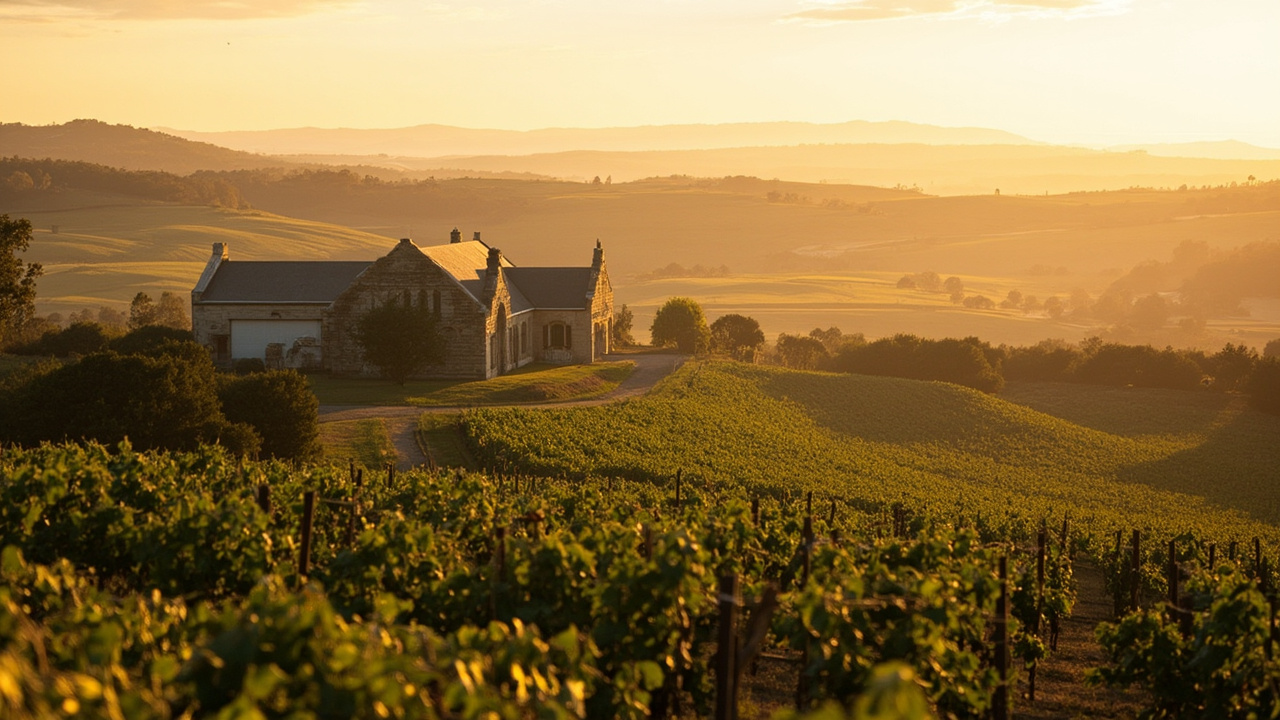
The Barossa cellar doors are mostly working wineries in heritage stone buildings, many of them originally built by Silesian settlers in the 1840s and 1850s. Seppeltsfield, Langmeil, and Rockford all look and feel like they did 100 years ago. Tastings are conducted at the bar or in a small private room, often by someone who has worked there for decades. There are restaurants and cafes, but the cellar doors themselves are the focus and the food is secondary.
The Hunter cellar doors are more polished and more visitor-focused. Many are purpose-built tasting rooms attached to large restaurants, with cheese boards, picnic hampers, and brewery and distillery neighbours on the same estate. The aesthetic is closer to a wine country resort than a working farm. This is not a criticism. The Hunter caters to weekenders from Sydney who want a relaxed day out with good food and wine, and the cellar doors are designed for that. The Barossa caters to people who want to taste serious wine in the place it was made, and the cellar doors are designed for that too.
If you want to feel like you have stepped back into 19th century wine country, choose Barossa. If you want to feel like you are on a sophisticated day out with excellent food pairings, choose Hunter.
Both regions peak during harvest, March to May in the Southern Hemisphere. The wineries are busy, the tanks are full, the energy is high, and you can sometimes catch a winery actively processing fruit. The downside is that some cellar doors get crowded on weekends, and bookings at the most popular spots (Seppeltsfield in the Barossa, Tyrrell's in the Hunter) need to be made weeks ahead.
The Barossa shoulder season is October to November, spring, when the weather is mild and the cellar doors are quieter. Winter, June to August, is the slow season and some smaller cellar doors reduce their opening hours. The Hunter has a slightly different rhythm: September to October is the second-best window, with warm days and not yet the school holiday crowds of harvest. Summer in the Hunter can be hot and humid, which is not ideal for walking around vineyards or sitting outside for a long tasting.
Choose the Barossa if you are a serious red wine drinker, if you care about heritage and provenance, if you want to taste wines made from vines planted before the American Civil War, and if you are happy spending a full day focused on wine with food as a supporting act. The Barossa rewards concentration. You can do six cellar doors in a day and most of them will be excellent. You will leave with a case of shiraz and a much better understanding of why this valley has been making wine for 180 years.
Choose the Hunter if you are visiting Sydney and want an easy overnight or day trip, if you prefer white wine or aged wine over big reds, if you want cellar doors with restaurants and food pairings built into the tasting, or if you are travelling with people who are not exclusively wine-focused. The Hunter is more relaxed, more food-oriented, and easier to combine with non-wine activities like cheese factories, breweries, and distilleries. It also makes a better short trip because the logistics from Sydney are straightforward and most operators handle everything.
Choose Barossa for big reds and century-old vines. Choose Hunter for semillon and a Sydney day trip.
If you are based in Adelaide or planning a South Australia trip, the Barossa is the obvious answer. The cellar doors are denser, the wines are more distinctive, and the heritage is unmatched anywhere else in Australia. If you are based in Sydney or spending a few days in New South Wales, the Hunter is the obvious answer. It is close, it is well-organised for visitors, and the semillon experience is something you cannot get anywhere else in the country.
Neither is the wrong choice. The wrong choice is booking a tour that hits four wineries in a region where the geography does not actually allow it, or going to the obvious visitor trap and missing the cellar doors that make each region worth visiting in the first place. Pick the region, then pick the cellar doors carefully.
For Barossa, the Barossa Valley Hop-On Hop-Off Wine Tour from Adelaide is the format I recommend to most visitors. The bus loops between roughly 8 to 10 stops including Seppeltsfield, Langmeil, and Rockford, and you choose how long to spend at each. This is the only tour type that actually lets you spend 90 minutes at Seppeltsfield and 20 minutes at a lesser stop.
For Hunter, the All-Inclusive Hunter Valley Wine Tour from Sydney is the small-group day trip most visitors want. Pickup from central Sydney hotels, lunch included, visits to three or four of the better cellar doors including Tyrrell's and Brokenwood. It is the most efficient way to do the Hunter if you do not have a car and do not want to drive yourself.
Cost of a day tour: Comparable. Both regions run tours in the AUD 180 to 280 range for a full day including lunch and pickups, with the Hunter tending slightly higher because of the longer drive from Sydney.
Driving yourself: Easier in the Barossa because the wineries are concentrated and the roads are flat and well-signed. The Hunter requires more navigation and the cellar doors are further apart. Designated driver rules apply in both: the legal alcohol limit is 0.05 BAC and most operators enforce zero tolerance on tour buses.
Where to stay overnight: Both regions have a mix of vineyard cottages, boutique hotels, and standard motel accommodation. The Barossa has more heritage-style accommodation in old stone buildings. The Hunter has more resort-style options with on-site restaurants and spas.
Food: The Barossa food scene is centred on the wineries themselves, with Maggie Beer's Farm Shop and a handful of exceptional restaurant-pubs in Tanunda and Angaston. The Hunter has more cellar door restaurants, more breweries, and more cheese and chocolate factories, which is either a feature or a distraction depending on your view.
Combining both: Possible but not easy. They are on opposite sides of the country, separated by about 1,400 km and a flight or a long drive. If you are visiting Sydney and Adelaide in the same trip, do Hunter from Sydney and Barossa from Adelaide. Do not try to combine them into a single itinerary.
| Tour Name | Duration | Start Time | Food / Inclusions | Price | Book |
|---|---|---|---|---|---|
| Barossa Valley Hop-On Hop-Off Wine Tour from Adelaide | 8 hours | 9:00 AM (first bus departure) | Hop-on hop-off, tastings at your own pace | from $89 | Book on Viator → |
| All-Inclusive Hunter Valley Wine Tour from Sydney | 11 hours | 7:30 AM (hotel pickup) | Cellar door tastings + cheese + lunch | from $189 | Book on Viator → |
Related guides and comparisons: