Cellar Door Seasons — A Complete Guide to Vines & Plates
We earn a commission when you book through our links on Viator (PID None), at no extra cost to you. This is how we keep the site free. Learn more →
I've Been to Vines & Plates in Every Season. Here's the Truth
I've done the Barossa run in 38-degree February heat, in the middle of vintage chaos, and in a July fog so thick I couldn't see the vines from the car window. The truth is that cellar door seasons in Vines & Plates are not created equal — and most guides don't tell you the part that actually matters: how the season changes your experience, your tasting fees, and whether you'll get a table for lunch.
Summer (December through February) is peak. The Barossa hits 30–40°C and the cellar doors are packed from 10 AM. If you're coming on a weekend, you need to book 2–4 weeks ahead — not just for the tasting, but for lunch. I've watched walk-ins get turned away from Hentley Farm's restaurant at 11:45 AM on a Saturday because every table was gone by Thursday.
Autumn (March through May) is vintage. The wineries are frantic — fermenters running, crews picking at dawn — but the cellar doors are actually calmer than summer because the tourists have thinned out. The foliage turns gold and red, and you might catch a winemaker actually in the cellar door pouring for you because the usual staff are busy. That's when you get the honest answers.
Winter (June through August) is the quiet season. It's 8–18°C, the crowds vanish, and fewer tours operate. But this is the best time for red wine by the fire — and the cellar door staff have time to talk properly. Spring (September through November) brings wildflowers, moderate temperatures, and the new vintage releases. Availability is good, and it's my pick if you want a relaxed trip without the summer heat.
One thing that doesn't change across seasons: the tasting fees. Barossa cellar door fees now range widely — I've paid as little as nothing at small family outfits and as much as $25 per person at the big names. Most are refundable with purchase, but not all. Ask before you pour.
If you want the full range without driving yourself, I've taken the Experience SA Barossa Wine Tour- Pickup from Adelaide Area Experience SA Barossa Wine Tour with pickup from Adelaide, and it handles the logistics properly — you get picked up, dropped off, and don't have to worry about the designated driver question at all.
Experience SA Barossa Wine Tour- Pickup from Adelaide Area: Best in Peak Season
This is the tour I recommend for summer specifically. When it's 38 degrees and you've got four wineries to cover, the last thing you want is to be behind the wheel. The Experience SA tour (which runs about 420 minutes with pickup from the Adelaide area) is built for peak season — the operators know which cellar doors have air conditioning and which ones pour quickly, so you're not standing in the sun waiting for a tasting that's running 20 minutes behind.
I took this in February and the itinerary was smart. We hit a big-name producer in the morning when the crowds were manageable, then a smaller family operation after lunch when the tour buses had moved on. The pacing meant we never felt rushed, and we weren't stuck at one cellar door while the group photo dragged on for 25 minutes.
Skip this if you prefer to set your own pace or if you're travelling with a group larger than the tour capacity — the fixed itinerary doesn't flex for a "can we stay longer at this one?" request. And if you want to taste something specific that's not on the list, you're out of luck. But for peak season, when every cellar door is shoulder-to-shoulder, having someone else manage the bookings is worth the money.
The Month That Changed How I See Vines & Plates
It was July. Mid-winter, 11 degrees, and I had the Barossa almost to myself. I'd booked a private tour because I was writing a piece on winter cellar door experiences, and what I found changed how I think about this region entirely.
The cellar doors that stay open in winter — and not all of them do — operate differently. Hours shift earlier, with many closing by 4 PM instead of 5. The staff are the senior people, not the casuals hired for summer. I sat at a tasting bench at Rockford for 45 minutes with no one else in the room, and the pourer talked me through the 2019 Basket Press like we had all the time in the world. That doesn't happen in February.
The other thing winter does is make you focus on what the Barossa actually does well: big reds. I tasted through a lineup of shiraz and grenache that would have been an afterthought in summer, and the depth of conversation about vintage conditions, oak treatment, and the decision to pick early or late was the kind of education you can't get from a back label.
If you're coming in winter, book a private tour. The Classic Mustang Convertible Barossa Valley Half Day Private Tour For 2 Classic Mustang Convertible Barossa Valley Half Day Private Tour For 2 runs about 210 minutes and is surprisingly great in low season. The convertible roof stays up in July, obviously, but the heater works and the experience of rolling through the vine rows in a Mustang with the whole region to yourself is a different kind of luxury than the summer version.
Skip this if you're expecting a sunny, wind-in-your-hair convertible experience — in winter, that's not what you're getting. You're getting a warm car, a knowledgeable driver, and a private tasting itinerary that doesn't share your table with strangers. For a winter trip, that's exactly right.
Classic Mustang Convertible Barossa Valley Half Day Private Tour For 2: Surprisingly Great in Low Season
I'll be straight with you: I booked this tour partly as a joke. A Mustang in the Barossa in July? It sounded like a tourist trap. But the driver knew the region cold, and the private format meant we could skip the cellar doors I'd already visited and hit the ones I needed for research.
The 210-minute format is tight but workable. We did two cellar doors and a quick lunch stop, and because it was winter, we never waited for a table or a pour. The driver had relationships with the cellar door managers, so we got a few things poured that weren't on the standard tasting list — including a museum release that had been sitting in the winery's library for a decad.
The key advantage of a private tour in low season is flexibility. In summer, the driver has a schedule to keep because the next booking is waiting. In winter, the schedule is yours. We spent an extra 20 minutes at one winery because the conversation was good, and the driver didn't car.
Skip this if you're a solo traveller — the tour is built for two, and the pricing reflects that. And skip it if you want a full-day experience; at 210 minutes, you're getting a half day, and you won't cover more than two or three cellar doors comfortably.
Packing Lessons I Learned the Hard Way
I've made every packing mistake a wine traveller can make, so you don't have to. Here's what I've learned across four seasons of cellar door visits.
In summer (December–February): Bring a hat, sunscreen, and a refillable water bottle. The Barossa hits 30–40°C and cellar door tasting rooms are often the only air-conditioned space for kilometres. But here's the thing nobody tells you — the walk between the car park and the cellar door is often in full sun, and I've seen more than one person cut a tasting short because they were overheating. Comfortable shoes matter more than you think; the "cellar door" at some wineries is a 200-metre walk from the car park, and it's not always paved.
In winter (June–August): Layers. The temperature swings from 8°C in the morning to 18°C by midday, and cellar doors keep their interiors cool for the wine. I've sat through a tasting in a thin shirt and been genuinely cold by the end. Bring a jacket you can take off and tie around your waist — you'll be doing that dance all day.
In autumn (March–May): This is harvest season, so expect mud. The car parks at some wineries are gravel or dirt, and after a rain they turn to sludge. I ruined a pair of suede boots at a McLaren Vale cellar door in April and learned my lesson. Waterproof shoes, or at least ones you don't care about.
In spring (September–November): Pollen. If you have hay fever, bring antihistamines. The Barossa in spring is beautiful — the wildflowers are out — but that means the air is thick with pollen, and I've watched people suffer through tastings because they couldn't taste anything through a blocked nos.
The other thing I always pack now: a small notebook or phone note template. Tasting fees blur together after the third cellar door, and I've lost track of which wine was which more times than I'd like to admit. Write down the vintage, the varietal, and the price as you go. Future you will be grateful.
What I Wish I'd Known Before I Went
I've been visiting Vines & Plates for over a decade, and there are still things I learned the hard way. Here's the list I give everyone who asks.
Cellar door hours are not universal. Most cellar doors in Australian wine regions operate 10 AM–5 PM, but some close earlier in winter, and some are closed entirely on certain days. I've shown up at a winery at 4:30 PM in July to find the doors locked and the lights off. Check hours before you drive anywhere — it's a 20-minute drive between some cellar doors, and a closed door wastes your whole afternoon.
Eden Valley Riesling is the Barossa's most underpriced category. Everyone talks about shiraz, but the Riesling from producers like Pewsey Vale at cellar door is exceptional — and it ages for 15+ years. I've got bottles in my cellar from 2015 that are just hitting their stride. If you're looking for something to buy that isn't a $100+ shiraz, this is it.
Penfolds Grange is not available at the Barossa cellar door. I get asked this constantly. The Grange tasting happens at Magill Estate in Adelaide, and it books out 4–6 weeks ahead. The Barossa cellar door doesn't pour Grange at all. If you want to taste it, plan ahead — you can't just show up.
Cellar door staff are paid hourly plus commission. This is the thing nobody tells you. They're incentivised to upsell, which is why the first pour is always the most expensive bottle in the range. It's not a conspiracy — it's just how the economics work. If you're on a budget, say so upfront. A good pourer will adjust the tasting to what you're actually going to buy.
Tasting fees are refundable — but not always. Barossa cellar door tasting fees range widely, and most are refundable with purchase. But "most" isn't "all." I've been to cellar doors that charge $25 and don't refund it unless you buy a case. Ask before you taste. It's a 10-second question that saves you money.
Hop-on hop-off tours are the cheat code. If you want to choose your own cellar door stops and pace, a hop-on hop-off wine tour lets you do exactly that. You're not locked into a fixed itinerary, and you can stay longer at the places you love and skip the ones you don't. I've done this in the Barossa and it's genuinely the best way to tackle four wineries without a designated driver.
Book lunch ahead. This is the one I keep repeating. The good restaurants at Barossa wineries — Hentley Farm, Fino, FermentAsian — book out days or weeks in advance, especially in peak season. I've watched couples get turned away at the door because they assumed they could walk in. If you're doing a full-day tour, book lunch as soon as you book the tour.
If you want the full-day experience with lunch included, the Barossa Wine Tour - Max 6 guests incl Chef's Menu Lunch with wine Barossa Wine Tour with Max 6 guests and a Chef's Menu Lunch runs 480–540 minutes and is the most complete way to do the region in a day. The small group size matters — you're not on a bus with 40 people, and the chef's menu lunch is a proper sit-down meal, not a platter of cheese and crackers.
Skip this if you prefer to organise your own lunch or if you want a more casual day. The chef's menu format is a proper restaurant experience, and it adds time to the day. But if you want the full Barossa experience in one go, this is the on.
And one more thing: the best time to visit is the season that matches your personality. If you want energy and crowds, come in summer. If you want quiet and conversation, come in winter. If you want to see the vines in action, come in autumn during vintage. If you want new releases and mild weather, come in spring. There's no wrong answer — but there's a right answer for you.
Private Château Tour and Tasting in Australia
If you're after something a bit different from the standard cellar door circuit, the Private Château Tour and Tasting in Australia Private Château Tour and Tasting in Australia is worth considering. It's a private format, which means you're not sharing the experience with strangers, and the "château" framing gives it a different feel from the typical Australian cellar door — more formal, more structured, and a good option if you're celebrating something or want a more polished experienc.
I've done this one with visiting overseas guests who wanted the "Australian wine country" experience but weren't sure what to expect from a cellar door. The private format meant the pourer could tailor the tasting to their palate — they were more into white wine than red, which is unusual for the Barossa — and the flexibility made the difference between a good afternoon and a great on.
Skip this if you're on a tight budget or if you prefer the casual, come-as-you-are vibe of a standard cellar door. The private format costs more, and if you're happy to share a tasting bench with other travellers, you'll get a similar experience for less. But if you want the undivided attention of someone who knows the wines, this is the way to do it.
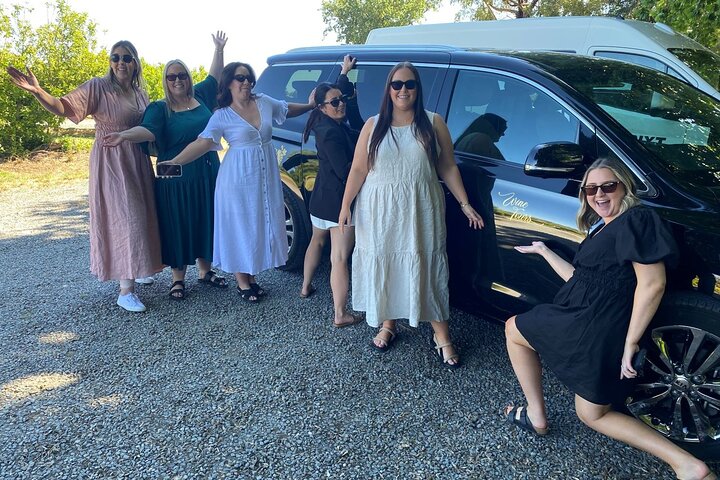
Experience SA Barossa Wine Tour- Pickup from Adelaide Area
From A$165 · Price checked: Aug 2026
Explore the Barossa in our spacious Kia Carnival vehicles, accommodating up to seven people comfortably. Whether you're a seasoned wine connoisseur or simply love wine, join us on a journey with…
Check availabilityExternal booking on Viator · pricing and cancellations handled by Viator
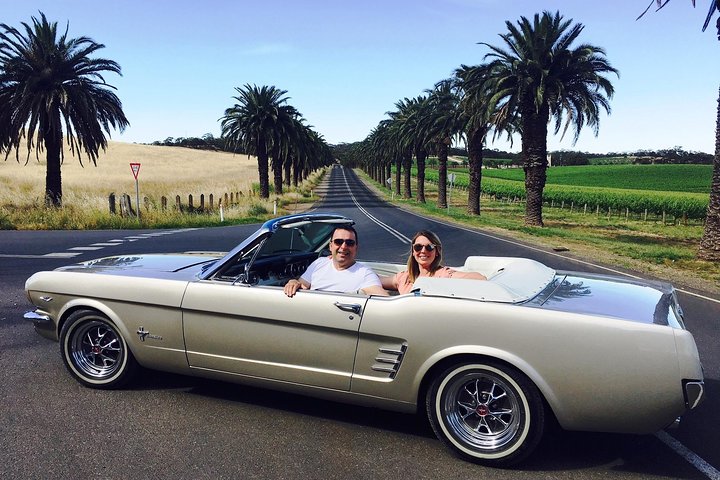
Classic Mustang Convertible Barossa Valley Half Day Private Tour For 2
From A$258.67 · Price checked: Aug 2026
Best for: couples marking an occasion who want to sample the Barossa from a private 1966 Mustang convertible.
Not for: larger groups or anyone indifferent to the car, since the convertible is most of what you're paying for.
Turn heads and feel the wind in your hair on an exhilarating private classic 1966 Mustang Convertible tour of the Barossa Valley. Enjoy the ultimate luxury, comfort and adventure as you sample the…
Check availabilityExternal booking on Viator · pricing and cancellations handled by Viator
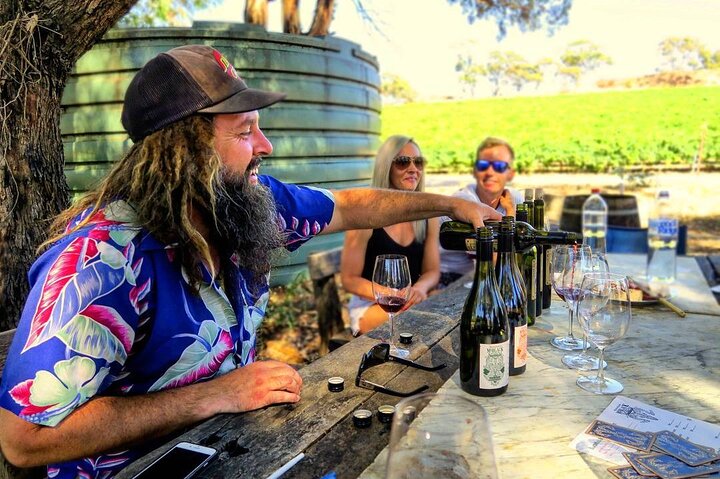
Barossa Wine Tour - Max 6 guests incl Chef's Menu Lunch with wine
From A$380 · Price checked: Aug 2026
Best for: tasters who want premium cellar doors with the tasting fees already paid and never more than six guests.
Not for: budget-conscious travellers, since capping the group at six and covering tasting fees carries a premium price.
This is premium small-group wine touring at it's best! Our very small groups have a maximum of 6 guests and we regularly depart with less. We visit premium wineries and pay the tasting fees, so you…
Check availabilityExternal booking on Viator · pricing and cancellations handled by Viator
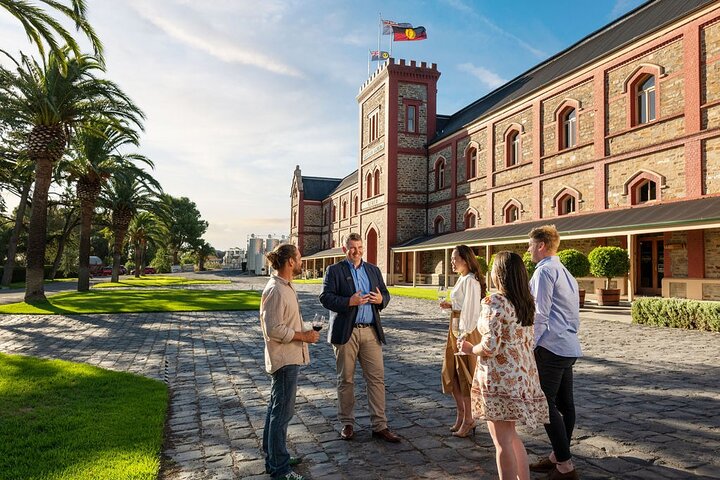
Private Château Tour and Tasting in Australia
From A$65 · Price checked: Aug 2026
Best for: visitors who want the Barossa's founding history and the stories behind the estate told by its own cellar door hosts.
Not for: drinkers who just want to taste and move on, as the day leans on three centuries of history.
Explore the Birthplace of the Barossa as our Cellar Door hosts take you on a journey through three centuries of history. Learn more about the secrets, the risks taken by the people that established…
Check availabilityExternal booking on Viator · pricing and cancellations handled by Viator
Explore More
Related comparisons and guides:
Frequently Asked Questions
What is the best season to visit Barossa cellar doors?
It depends on what you want. Summer (December–February) has the most energy and the longest hours, but also the biggest crowds and highest temperatures. Winter (June–August) is quiet, with senior staff pouring and time for conversation, but some cellar doors close early or shut entirely. Autumn (March–May) is vintage season — busy but not peak, with beautiful foliage. Spring (September–November) offers mild weather and new releases. For a first visit with good availability and moderate weather, spring is hard to beat.
How much do Barossa cellar door tasting fees cost?
Barossa cellar door tasting fees range widely, from free at some small family operations to $25 or more at the big names. Most are refundable with purchase, but not all — always ask before you taste. Some premium tastings, like Penfolds Grange at Magill Estate, cost significantly more and book out 4–6 weeks ahead.
Do I need to book Barossa wine tours in advance?
Yes, especially in peak season (summer weekends). Book 2–4 weeks ahead for weekend tours in December–February. In winter, you can often book a few days ahead, but private tours and tours with lunch included still need advance notice because the wineries need to prepar.
What are typical cellar door hours in the Barossa?
Most cellar doors operate 10 AM–5 PM, but hours vary. In winter, some close earlier (4 PM is common) and some are closed on certain days. Always check hours before you drive — some cellar doors are 20+ minutes apart, and a closed door wastes your afternoon.
Is the Barossa good for Riesling or just Shiraz?
The Barossa is famous for Shiraz, but Eden Valley Riesling is the region's most underpriced category. Producers like Pewsey Vale make exceptional Riesling at cellar door that ages for 15+ years. If you're looking for something to buy that isn't a premium Shiraz, Eden Valley Riesling is the smart choic.
What should I pack for a Barossa wine tour?
In summer: hat, sunscreen, water, comfortable shoes. In winter: layers — temperatures swing from 8°C to 18°C. In autumn: waterproof shoes (harvest means mud). In spring: antihistamines if you have hay fever. Always bring a notebook or phone note template to track which wines you tasted.